A New Challenger Enters the Ring
Wall Street and global financial hubs have a new focal point this week as Unitree, the Hangzhou-based powerhouse often dubbed the 'Boston Dynamics of China,' saw its stock price skyrocket during its initial public offering. The enthusiasm surrounding the debut wasn't just a flash in the pan; it signaled a growing investor appetite for hardware companies that can bridge the gap between high-end research and mass-market affordability. While the business world has been obsessed with software-based AI for the last year, Unitree’s performance suggests that the market is finally ready to see that intelligence put into motion.
The company, which first gained viral fame for its acrobatic quadruped robots that could perform backflips for a fraction of the cost of their Western counterparts, opened significantly higher than its initial guidance. This surge reflects a broader confidence in China’s ability to dominate the robotics supply chain, leveraging local manufacturing efficiencies to undercut global competitors. According to data tracked by the BBC, this listing comes at a pivotal moment when geopolitical tensions and technological self-reliance are at the forefront of every institutional investor's mind.
Breaking the Price Barrier
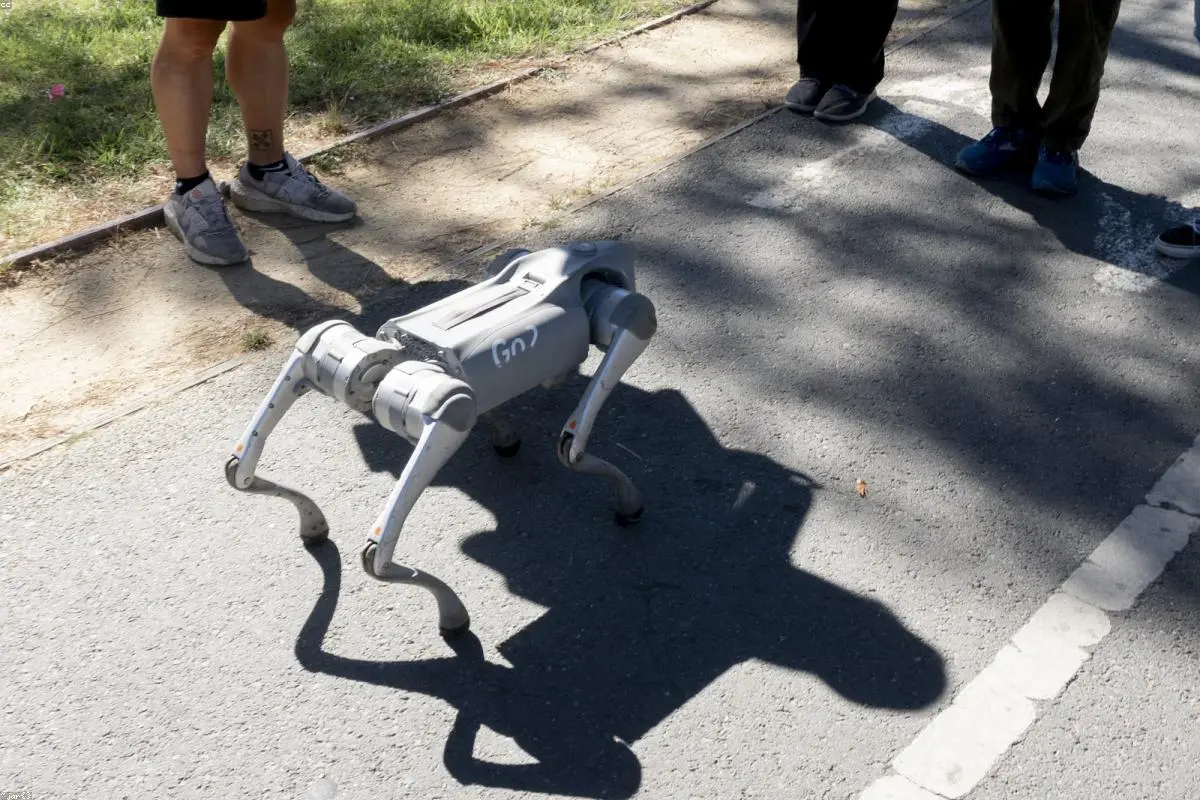
One of the primary drivers behind the investor frenzy is Unitree’s aggressive pricing strategy. For years, advanced robotics was a playground for well-funded research labs and military contracts. A single sophisticated robot could cost as much as a luxury home. Unitree flipped the script by offering the Go2 quadruped for a price comparable to a high-end laptop. This democratized access to the hardware, allowing developers, small businesses, and even hobbyists to experiment with autonomous systems.
This scalability is what makes the company a standout in the current market. Analysts argue that Unitree isn't just selling robots; they are selling a platform. By lowering the barrier to entry, they are effectively building an ecosystem where their hardware becomes the industry standard for academic and commercial research. This strategy echoes the early days of personal computing, where the goal was to get a machine on every desk. Now, the goal is to get a robot in every warehouse—and eventually, every home.
The Humanoid Pivot
While robot dogs are great for marketing and niche inspections, the real "holy grail" for investors is the humanoid form factor. Unitree recently unveiled the G1, a bipedal robot with an eye-popping starting price of $16,000. To put that in perspective, most competitors in the humanoid space are still operating with prototypes that cost hundreds of thousands of dollars. The G1’s ability to fold into a compact shape and its remarkably fluid movements have turned heads in both the tech and financial sectors.
The successful IPO provides Unitree with the massive capital injection needed to move the G1 from a celebrated prototype into mass production. Investors are betting that the company can replicate its success with quadrupeds in the humanoid space. If they can solve the remaining hurdles in battery life and real-world dexterity, the commercial applications in elderly care, disaster response, and logistics are virtually limitless. This isn't just about cool tech; it's about addressing the labor shortages currently plaguing global economies.
Navigating the Global Landscape
Despite the celebratory mood on the trading floor, the path forward isn't without its obstacles. Unitree operates in a highly sensitive sector where data security and international trade regulations are constantly shifting. As a Chinese company expanding globally, it faces scrutiny regarding how its robots collect data and where that information is stored. Maintaining growth in the North American and European markets will require a delicate balancing act of transparency and technical excellence.
Furthermore, the competition is heating up. With Tesla’s Optimus project and Figure AI receiving massive backing from Silicon Valley, the race for humanoid dominance has become a global sprint. Unitree’s advantage lies in its speed of iteration. While some companies spend years in the R&D phase, Unitree has shown a penchant for shipping products early and often, refining them based on real-world feedback. This "move fast and break things" approach, which was once the hallmark of Silicon Valley, seems to have been adopted and perfected by the Hangzhou giant.
As the first week of trading draws to a close, the narrative surrounding Unitree is one of cautious optimism backed by cold, hard cash. The company has successfully convinced the market that the era of affordable, capable robotics is no longer a futuristic dream but a present-day reality. Whether they can maintain this momentum as they scale up production remains to be seen, but for now, the 'Unitree effect' has officially put the world on notice.