A Perilous Mission Turns Fatal
The Mediterranean summer, once synonymous with idyllic tourism, has increasingly become a season of high-stakes battle. For the pilots who fly into the heart of Greece’s wildfires, the margin for error is razor-thin. This reality hit home with devastating force this week when two firefighting helicopters collided during a mission, resulting in the deaths of two crew members. Amidst the tragedy, news emerged that a British pilot involved in the incident managed to survive, a rare silver lining in an otherwise somber event.
The collision occurred as the aircraft were maneuvering through heavy smoke and difficult terrain—conditions that are standard for aerial firefighting but leave no room for mechanical or human oversight. According to reports from the BBC, the incident has sent shockwaves through the emergency response community, prompting an immediate investigation into the sequence of events that led to the mid-air impact.
The Hazardous Reality of Aerial Firefighting
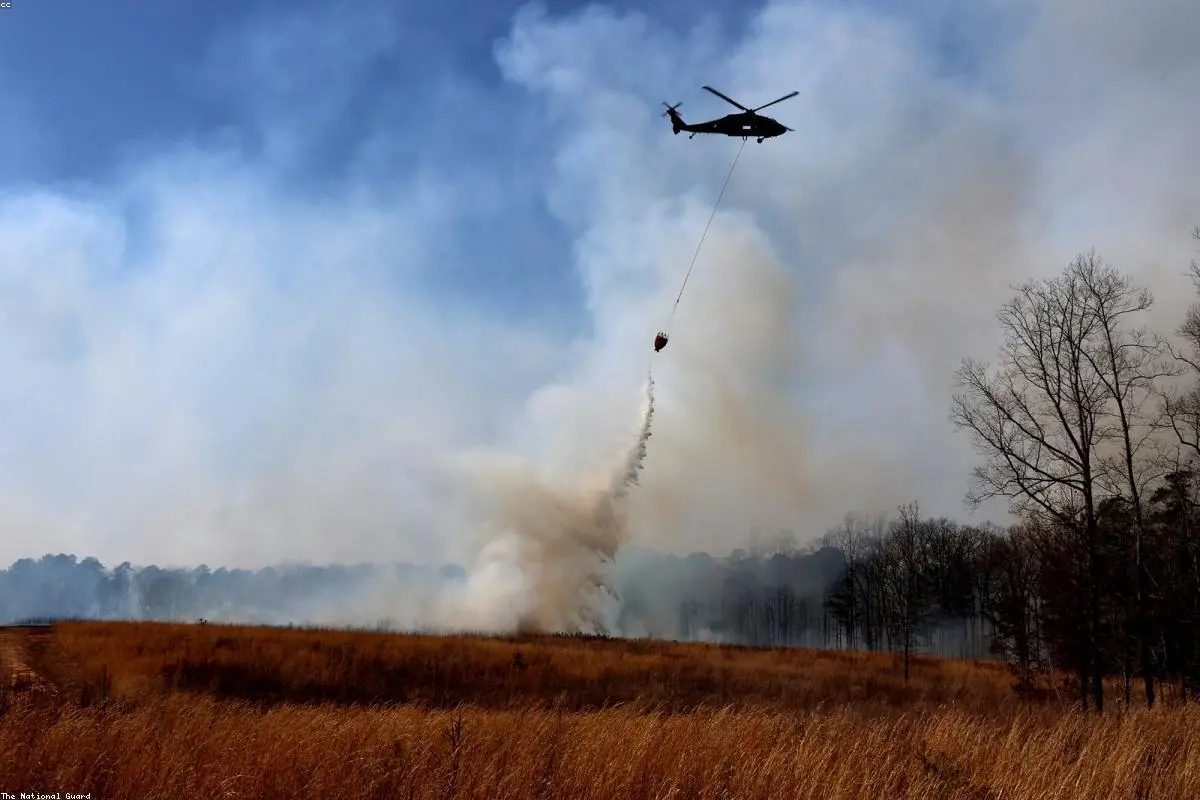
To understand how such an accident happens, one must appreciate the sheer intensity of firefighting from the sky. Unlike commercial aviation, which relies on high-altitude corridors and automated systems, firefighting pilots operate in the 'danger zone.' They fly at low altitudes, often just hundreds of feet above the ground, diving into canyons and valleys where the air is turbulent and visibility is frequently obscured by thick, choking plumes of ash.
In these scenarios, pilots are often operating under extreme pressure to protect homes and nature reserves. The heat generated by large-scale wildfires can create its own microclimate, leading to unpredictable updrafts and downdrafts that can toss a multi-ton helicopter like a leaf in the wind. When multiple aircraft are assigned to the same 'drop zone' to maximize impact, the coordination required is nothing short of surgical. Even with modern radio communication, the chaos of a live fire scene makes every second a test of skill and nerves.
An International Effort Under Strain
The presence of a British pilot in the cockpit underscores the global nature of modern disaster response. Wildfire management has become a cross-border industry, with specialized crews and equipment moving between hemispheres to follow the fire seasons. This incident falls under the broader scope of international cooperation, where pilots from the UK, Canada, Australia, and across Europe often find themselves working side-by-side in foreign territories.
These international teams are essential because local resources are frequently overwhelmed by the sheer scale of the blazes. However, this reliance on a global workforce also means that tragedies like the one in Greece have repercussions felt far beyond the Mediterranean. Families in different corners of the world wait for news, and aviation authorities must coordinate across borders to share safety data and preventative measures.
The Survival of the British Pilot
While the loss of two lives is a heavy blow, the survival of the British pilot has been described by some on the scene as miraculous. Surviving a helicopter collision, especially one occurring during active firefighting maneuvers, is statistically rare. Details regarding the pilot’s condition have been kept relatively private out of respect for the families of the deceased, but it is understood that the survivor is receiving medical attention and will be a key witness in the upcoming investigation.
His testimony will be vital for the Hellenic Fire Service and aviation safety boards. Investigators will look into everything from flight paths and radio transcripts to mechanical maintenance logs. They seek to answer the difficult questions: Was it a failure of communication, a sudden change in wind direction, or a mechanical glitch that brought these two machines together? The goal is not just to assign blame, but to ensure that such a catastrophe never happens again.
The Rising Stakes of the Fire Season
This incident is a grim reminder that as our climate changes, the 'fire season' is becoming longer and more aggressive. Greece, like much of Southern Europe, has seen a marked increase in the frequency and intensity of wildfires. This necessitates more flights, more pilots, and more hours spent in the air under grueling conditions. The human cost of these fires is often measured in lost property or destroyed forests, but we must also account for the lives of those who stand on the front lines.
As the investigation continues, the focus remains on supporting the families of the fallen and the recovery of the surviving pilot. The bravery of these crews cannot be overstated. They fly toward the danger that everyone else is fleeing, often at the ultimate cost. This tragedy serves as a poignant moment for the global community to reflect on the risks inherent in protecting our planet and the extraordinary people who take on that burden.