The Price of Speed: A Relentless Pursuit
The sound of carbon fiber splintering against asphalt is a noise Harry McCoy has heard twice in just over a year. For most people, a single high-speed accident would be enough to permanently park the bike and seek a quieter life. But for those who inhabit the unique, visceral world of sidecar racing, the logic of the average bystander rarely applies.
McCoy’s recent history is a sobering reminder of the physical toll extracted by motorsport. Having faced his second major crash in just 13 months, the questions from fans and family alike have shifted from "When will you be back?" to a more fundamental "Why?" To understand the answer, one has to look beyond the broken bones and into the psychological makeup of a competitor who views the track not as a danger zone, but as the only place where life feels truly lived.
The 13-Month Gauntlet
It was a little over a year ago when McCoy first felt the violent reality of a racing incident. Recovery from that initial blow was grueling, involving months of rehabilitation and the mental gymnastics required to convince oneself that it was a freak occurrence. However, when the second impact happened recently, the narrative changed. It was no longer a one-off; it was a pattern that demanded reflection.
As reported by BBC Sport, the resilience McCoy has shown is nothing short of remarkable. In many ways, the second crash was more of a mental hurdle than the first. When you go down once, you can call it bad luck. When it happens twice in such a short window, you are forced to confront the mechanical and human vulnerabilities that define this corner of the Sports world. You can find more coverage of similar high-stakes stories in our Sports section.
Transitioning from the sterile environment of a hospital ward back to the paddock requires a specific type of tunnel vision. For McCoy, the motivation isn't found in a reckless disregard for safety, but in a calculated acceptance of risk. He isn't ignoring the danger; he is acknowledging it, documenting it, and then deciding that the reward of a perfectly executed corner is worth the potential cost.
The Psychology of the Sidecar Racer
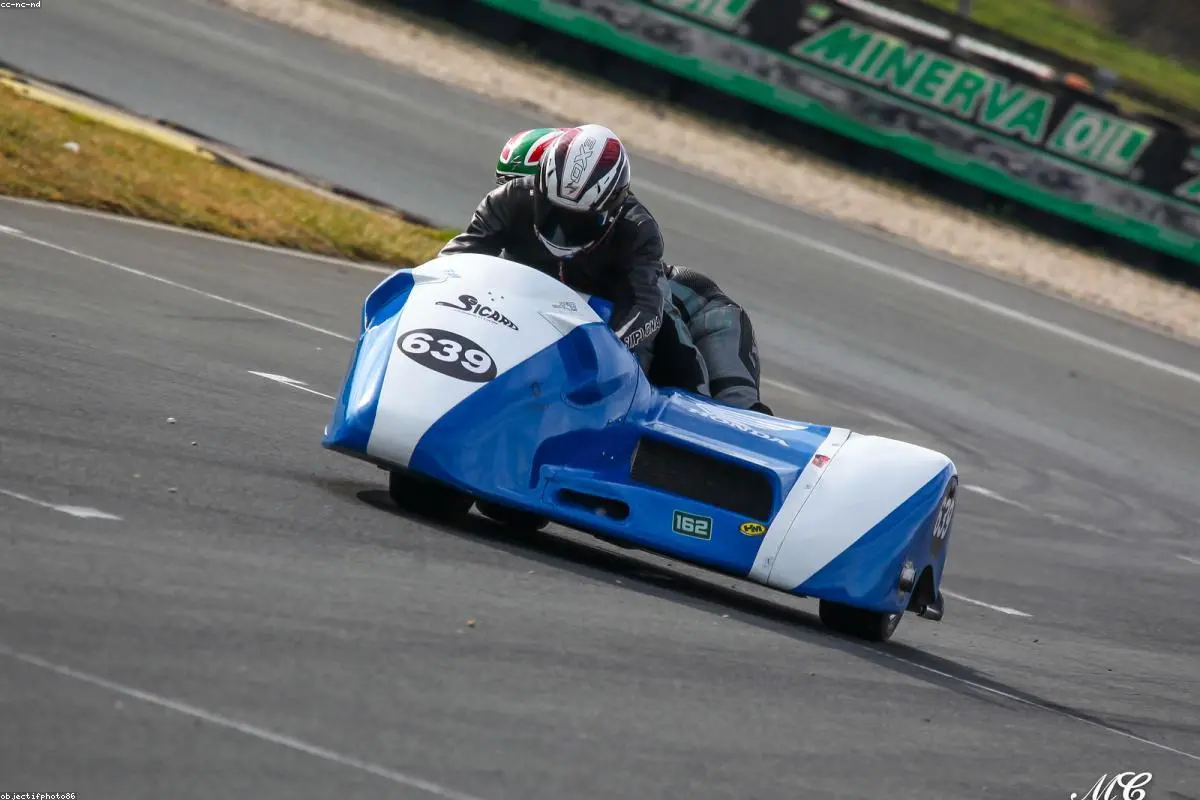
Sidecar racing is an outlier even within the adrenaline-fueled sphere of motorsport. Unlike solo motorcycle racing, it is a collaborative effort—a dance between driver and passenger where synchronization is the only thing keeping the outfit on three wheels. This shared responsibility adds a layer of complexity to the recovery process. When McCoy analyzes his drive to return, he often speaks of the bond with his partner and the collective goal they have yet to achieve.
Experts in sports psychology often point to 'sensation seeking' and 'high-order resilience' when discussing athletes like McCoy. It isn't just about the rush of dopamine that comes with speed; it's about the identity of being a racer. For Harry, the 13 months between these two crashes weren't defined by the pain of the first, but by the progress made toward the next race. The crash is a momentary interruption in a lifelong conversation with the machine.
The Road to Recovery and the Future
Rehabilitation after the second crash involves more than just physical therapy. It involves rebuilding a machine that has been mangled and a confidence that has been tested. McCoy’s journey back to the grid is a meticulously planned operation. Every bolt tightened on the sidecar is a step toward reclaiming his place in the sport.
- Physical Fortitude: Rebuilding muscle mass and joint stability after impact trauma.
- Mental Reset: Using data analysis to understand the crash and remove the 'mystery' of the failure.
- Equipment Evolution: Implementing new safety measures to mitigate the risks of a third incident.
Despite the hurdles, the fire hasn't dimmed. If anything, the double-blow of the last year has clarified McCoy's perspective. There is a sense of unfinished business that drives him. He isn't looking for a graceful exit; he is looking for the podium that he knows is within reach if he can just keep the rubber side down.
A Community of Support
One of the often-overlooked drivers in McCoy’s recovery is the motorsport community itself. In the paddock, there is no judgment for wanting to return, only a quiet understanding of the compulsion. This support network acts as a safety net, providing the technical expertise and emotional backing needed to bridge the gap between a hospital bed and a starting line.
Ultimately, what drives Harry McCoy isn't a lack of fear. It is a profound passion for a sport that demands everything from its participants. As he prepares for the next chapter, the scars of the last 13 months serve as both a warning and a badge of honor. In the world of high-speed racing, the only way to get over a crash is to look toward the next horizon, and for McCoy, that horizon has never looked clearer.