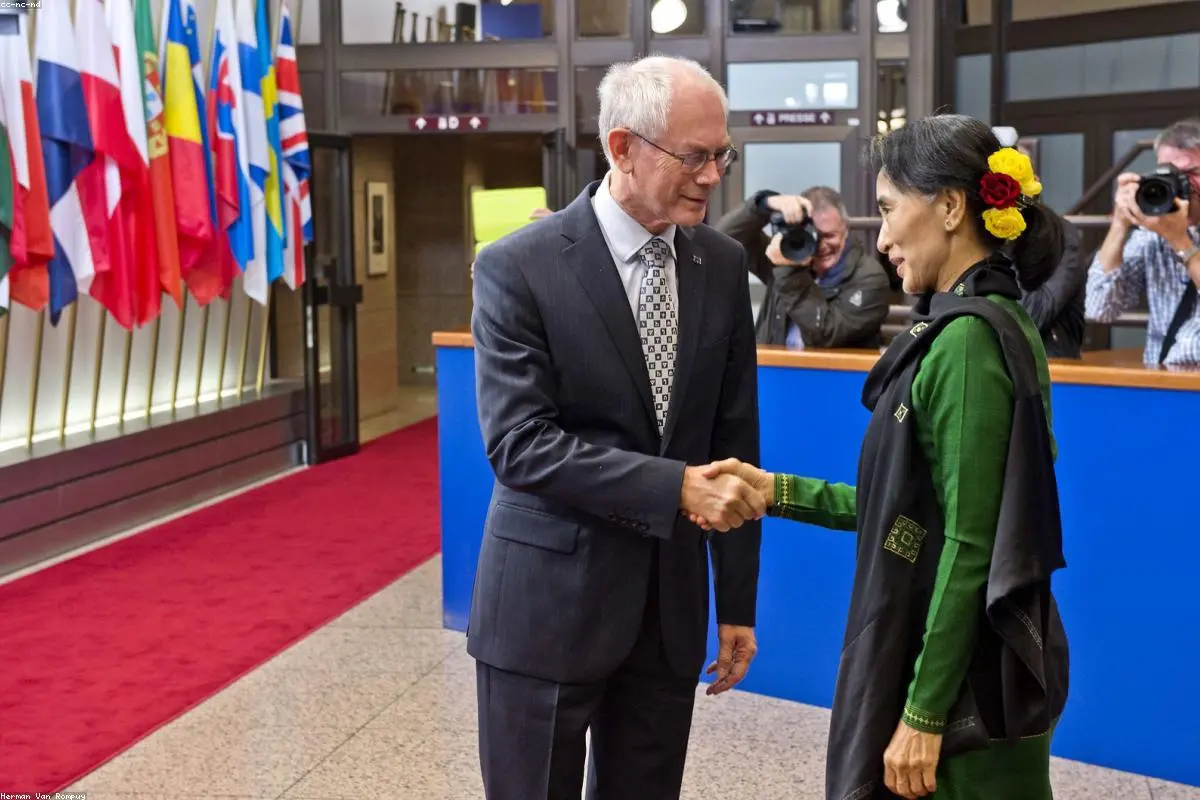
For two and a half years, the world knew virtually nothing about the daily reality of Myanmar’s former civilian leader, Aung San Suu Kyi. Held in near-total seclusion by the ruling military junta since the February 2021 coup, recurring rumors regarding her deteriorating health and mysterious living conditions have routinely sparked global alarm.
That dense veil of isolation finally lifted, if only briefly. In the first confirmed contact with the 78-year-old Nobel Peace Prize laureate in 30 months, reports indicate that Suu Kyi appears to be in relatively good health—a surprising revelation given the harsh conditions of her prolonged detention.
Isolation, Rumors, and a Long-Awaited Update
Since being ousted from power, Suu Kyi has been hit with a mountain of legal charges widely condemned by civil rights groups as politically motivated fabrications. Sentenced to decades behind bars, she was transferred from house arrest to a custom-built compound in the capital city of Naypyidaw, cut off entirely from her legal team, family, and foreign diplomats.
The total blacking out of information fueled intense anxiety among her supporters, particularly as reports circulated last year suggesting she was suffering from severe gum disease and low blood pressure. However, recent information relayed through diplomatic and official channels—initially highlighted in reports by the BBC—presents a far more reassuring picture of her current physical condition.
Her son, Kim Aris, who lives in the UK, has been among the most vocal advocates pressing for her release. While details about the precise nature of the contact remain tightly guarded due to security concerns, the verification that she is alive and in sound health provides a moment of profound relief after years of agonizing silence.
Why Is the Junta Allowing Contact Now?
To understand why the military regime is allowing information to trickle out now, one has to look at the broader landscape of international relations and Myanmar's shifting internal civil war. The timing is far from coincidental.
Over the past six months, the military junta led by Min Aung Hlaing has suffered catastrophic losses on the battlefield. An alliance of ethnic armed organizations and anti-coup resistance fighters has seized vast swathes of territory, capturing crucial trade routes along the Chinese border and capturing scores of military outposts.
Faced with growing economic collapse, battlefield humiliation, and rising anger from neighboring nations, the military leadership is increasingly desperate for leverage. Political analysts suggest that signaling flexibility around Suu Kyi’s status could be a calculated move to:
- Ease international sanctions: Softening their stance on Suu Kyi might be aimed at reducing diplomatic isolation from Western nations and regional neighbors like ASEAN.
- Divide opposition forces: Suu Kyi remains an immensely popular figure, but younger, radicalized resistance groups have moved beyond her non-violent philosophy. Any perceived shift in her treatment could be used to sow confusion among anti-junta coalitions.
- Prepare for a managed political exit: As military pressure mounts, the regime may eventually try to use Suu Kyi as a bargaining chip in future peace negotiations.
A Nation Still Locked in Conflict
While news of Suu Kyi’s health offers a rare glimmer of hope, it does little to alleviate the ongoing tragedy gripping Myanmar. Millions of citizens remain displaced by military airstrikes, the economy is in freefall, and thousands of political prisoners remain locked away in dismal conditions without access to healthcare or legal counsel.
International human rights organizations caution against viewing this limited contact as a sign of genuine reform. Until Suu Kyi and all arbitrarily detained political leaders are unconditionally released, and until military violence against civilians ceases, brief updates on her well-being remain a small band-aid on a deep, unhealed wound.
For now, the global community watches closely. The fact that Aung San Suu Kyi has endured 30 months of solitary confinement with her health intact demonstrates a remarkable personal resilience. Whether this rare crack in the junta's wall of secrecy signals the beginning of real diplomatic dialogue—or merely another tactical maneuver by a struggling regime—remains to be seen.